Clear, Accurate Solar Pricing & System Sizing for Asia
Compare verified per-watt solar panel wholesale rates, size your hybrid inverter and battery bank for real household appliances, and calculate your exact electricity bill savings based on active utility tariffs in Pakistan.
Quick Solar Estimate (Pakistan)
🇵🇰Solar Rates & Regulations Across Asia
Select your country to view local panel rates per watt, utility tariff slabs, net metering rules, and available government subsidies.
Pakistan
PKR (Rs.) • NEPRA RulesHigh demand for N-Type TOPCon panels and 3-phase hybrid inverters with net metering.
India
INR (₹) • PM Surya GharDirect bank subsidies for rooftop solar via PM Surya Ghar portal and ALMM Tier-1 panels.
Bangladesh
BDT (৳) • SREDA / IDCOLIndustrial rooftop net metering across Dhaka and Chittagong textile manufacturing plants.
Philippines
PHP (₱) • Meralco / ERCFast payback due to high grid tariffs in Manila, Cebu, and typhoon-resistant installations.
Vietnam
VND (₫) • EVN / DPPASelf-consumption rooftop policies and industrial DPPA solar power agreements.
Indonesia
IDR (Rp) • PLN RulesPLN quota allocations and hybrid battery microgrids for residential and island sites.
UAE & Saudi Arabia
AED / SAR • Shams Dubai / SECBifacial N-Type modules built to handle extreme Middle East desert heat and reflection.
Malaysia & Thailand
MYR / THB • SEDA NEM 3.01:1 true net metering credit with TNB and Board of Investment tax incentives in Thailand.
Plan Your Solar System Accurately
Use our interactive tools to calculate load, check return on investment, and compare hardware specs before making purchase decisions.
Appliance Load Sizer
Select your home appliances (Inverter ACs, Fans, Refrigerators, Water Pumps) to get recommended PV panel count, inverter capacity, and battery storage.
Open Load Sizer →ROI & Payback Calculator
Calculate your monthly bill reduction, net metering feed-in credits, and estimated payback horizon factoring in yearly module degradation.
Calculate Payback →Equipment Price Matrix
Compare Tier-1 solar panels (LONGi, Jinko, Canadian Solar, JA Solar), string and hybrid inverters, and lithium battery storage systems.
Compare Hardware →In-Depth Solar Engineering & Buying Guides
Expert, practical articles to help you compare system sizes, inverter topologies, cell technologies, and battery storage chemistry.
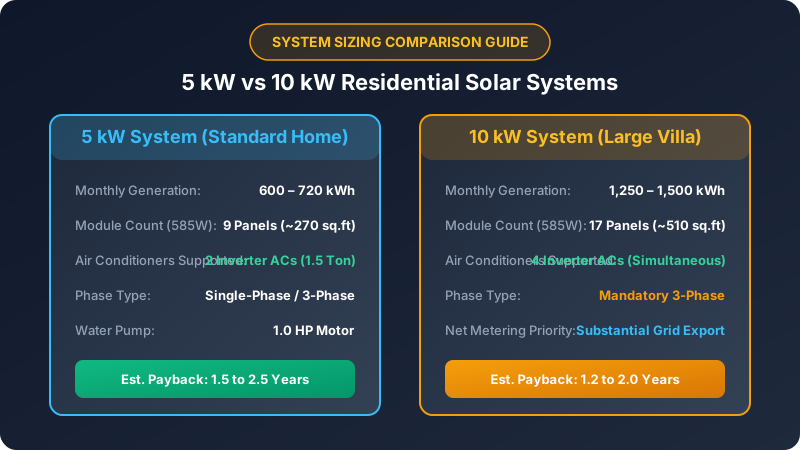
5kW vs 10kW Solar System
Load capacity, 3-phase requirements, turnkey costs, and payback comparison for Asian homes.
Read 5kW vs 10kW Guide →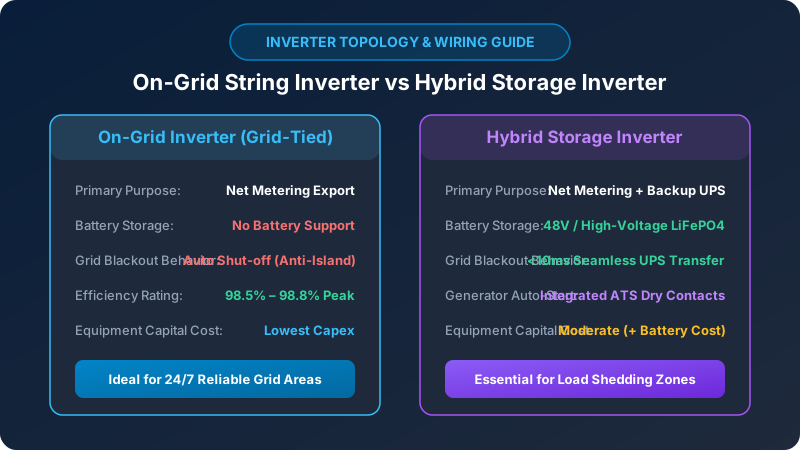
Hybrid vs On-Grid Inverters
Blackout behavior, anti-islanding rules, battery integration, and wiring differences.
Read Inverter Guide →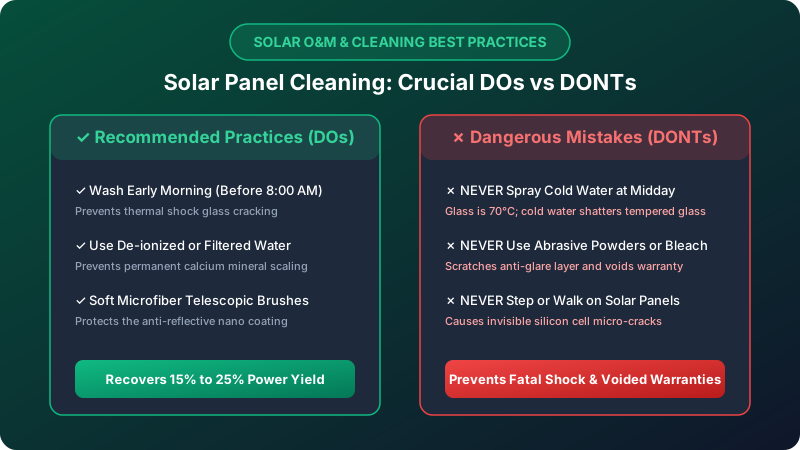
How to Clean Solar Panels Safely
Avoid thermal shock glass cracking, water quality standards, and recover 15%–25% power.
Read Cleaning Guide →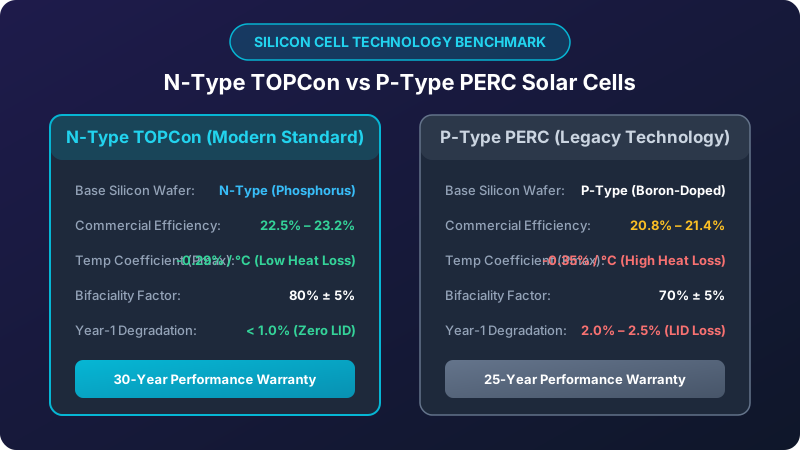
N-Type TOPCon vs P-Type PERC
Real-world temperature coefficient test (-0.29%/°C), zero LID degradation, and bifaciality.
Read TOPCon vs PERC →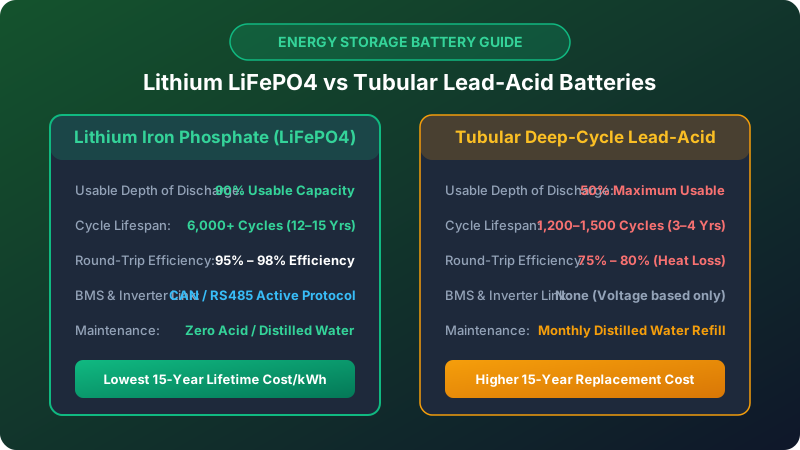
Solar Battery Storage Guide
Lithium LiFePO4 vs Lead-Acid Tubular batteries: Depth of Discharge, lifespan, and 15-yr TCO.
Read Battery Guide →Why Rooftop Solar is Rapidly Expanding in Asian Markets
Understanding the fundamental market dynamics driving residential and commercial solar adoption across South and Southeast Asia.
1. Escalating Grid Tariffs & Fuel surcharges
Across Pakistan, the Philippines, Bangladesh, and India, utility electricity bills have surged due to imported fossil fuel price volatility, capacity payment commitments, and IMF fiscal reforms. Peak electricity tariffs now exceed Rs. 62/unit in Pakistan and ₱12.80/kWh in Manila, making on-site rooftop generation the most reliable hedge against ongoing power inflation.
2. Global Polysilicon Supply & Price Parity
Massive global investments in polysilicon refining, wafer slicing, and cell manufacturing have driven Tier-1 solar panel costs down to historic lows between $0.10 and $0.13 per Watt in wholesale markets. Combined with high domestic utility rates, typical payback periods for residential rooftop setups have dropped from 5-6 years down to just 1.5 to 3 years.
3. Technological Transition to N-Type TOPCon
The mass commercialization of N-Type Tunnel Oxide Passivated Contact (TOPCon) and Back-Contact (HPBC) cell architectures has increased residential panel efficiencies past 22.8%. With lower temperature coefficients (-0.29%/°C), N-Type modules generate up to 4% to 7% more kilowatt-hours during scorching Asian summer afternoons compared to legacy P-Type PERC panels.
5 Key Steps to Installing Rooftop Solar in Asia
Load Audit
Calculate total kilowatt-hour usage and nighttime vs daytime energy split.
Roof Survey
Verify structural roof strength, shade-free area, and South-facing tilt angles.
Tier-1 Hardware
Select genuine Grade-A modules with internal barcodes and type-tested inverters.
Net Metering
Submit distributed generation interconnection paperwork with local utility DISCO.
Earthing & O&M
Ensure sub-5 Ohm copper grounding boring and bi-weekly dust washing routine.
Solar Questions Answered
Select Your Country
Select your location to update currency rates and local electricity tariffs across all calculators and tables.