
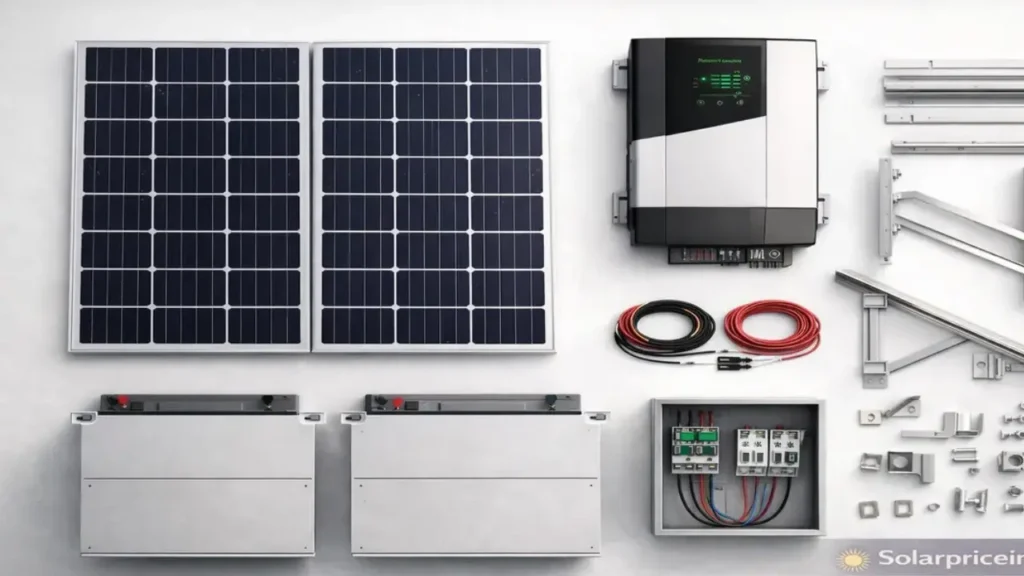
3kW Solar System Price in Pakistan 2026 – Complete Cost, Net Metering & Monthly Savings Guide
Electricity prices in Pakistan continue to increase every year, while load shedding still affects millions of households. Because of this, […]
Calculate your required solar system capacity, panel count, turnkey cost, and net metering ROI in real-time.
If you have checked your recent monthly electricity bill from utility companies like LESCO, K-Electric, IESCO, FESCO, or MEPCO, you already know why solar power has quickly shifted from an optional upgrade to an essential home investment in Pakistan. With peak residential grid rates pushing past Rs. 50 to Rs. 60 per unit alongside continuous fuel price adjustments (FPA), installing a rooftop solar system remains the single most reliable way to slash monthly power bills.
As of August 2026, per-watt solar panel prices in Pakistan have settled into a far more stable range compared to the sharp spikes seen in recent years. Surpluses in global raw silicon production combined with steady container shipments into major wholesale hubs—such as Lahore's Hall Road, Karachi's Saddar market, Rawalpindi, Faisalabad, and Multan—have brought Tier-1 solar modules down to accessible price points for Pakistani households and businesses.
This market guide provides a realistic, practical breakdown of current solar panel prices in Pakistan. Below, you will find technical comparisons of top Tier-1 brands (including Longi, Jinko, Canadian Solar, JA Solar, Trina, and Aiko), complete system turnkey cost estimations, cell technology evaluations, and step-by-step instructions to verify genuine serial numbers before buying.
Current retail prices for certified Tier-1 panels range between Rs. 26 and Rs. 63 per watt depending on cell architecture (older P-Type PERC vs. modern N-Type TOPCon / HJT), panel wattage rating, and warranty terms. For Pakistani weather—where summer rooftop temperatures frequently cross 45°C—N-Type TOPCon panels are strongly recommended due to their superior heat tolerance and lower efficiency loss.
Before buying solar panels, it helps to understand what actually drives local dealer prices up or down across Pakistani markets:
High manufacturing volumes of raw silicon wafers in China directly lower factory gate prices per watt for international brands.
Because panels are imported goods, landed container costs at Karachi Port track fluctuations in exchange rates.
Older Mono PERC panels are sold at clearance rates, while newer N-Type TOPCon modules cost slightly more per watt due to higher conversion efficiency.
Container arrivals in major cities like Lahore, Rawalpindi, and Karachi create short-term local price variations among dealers.
Yes. Current per-watt rates are at competitive historic levels while grid electricity tariffs continue to rise. Installing solar panels now allows you to recover your capital investment faster than ever before through direct bill savings and green energy exports.
| Core Advantage | Real-World Impact on Your Monthly Bill |
|---|---|
| Immediate Bill Reduction | Cuts monthly grid electricity costs by 80% to 95% depending on system sizing and daylight consumption. |
| Net Metering Grid Credits | Sends excess daytime electricity back to your DISCO grid (LESCO, IESCO, K-Electric) to offset night-time unit charges. |
| Protection Against Tariff Increases | Locks in your household generation costs for 25+ years, shielding you from quarterly DISCO rate hikes. |
| Fast Investment Payback | High grid per-unit charges shorten typical residential payback periods to just 2.5 to 3.5 years. |
| Proven Long-Term Durability | Tier-1 manufacturers back their panels with 12–15 years of product build warranty and 25–30 years of output performance guarantee. |
Longi Solar remains one of the most widely installed solar panel brands across Pakistan. Known for strong build quality and excellent conversion performance in warm climates, Longi's Hi-Mo 6 (HPBC technology) and Hi-Mo 7 (Bifacial TOPCon) series are top picks for home and commercial rooftops.
| Model & Specification | Price Per Watt | Estimated Panel Price | Availability |
|---|---|---|---|
| Longi Hi-Mo 5 540W (Mono PERC) | Rs. 52 – 63 | Rs. 28,080 – 34,020 | In Stock |
| Longi Hi-Mo 6 580W N-Type (HPBC Tech) | Rs. 38 – 55 | Rs. 22,040 – 31,900 | In Stock |
| Longi Hi-Mo 7 610W (Bifacial Dual-Glass) | Rs. 33 – 45 | Rs. 20,130 – 27,450 | In Stock |
| Longi Hi-Mo X10 650W (Ultra High Output) | Rs. 41 – 50 | Rs. 26,000 – 32,500 | In Stock |
Jinko Solar has built a dominant presence in Pakistan with its flagship Tiger Neo series. Utilizing advanced N-Type TOPCon cell technology, Jinko panels offer great low-light performance during early mornings and late afternoons, alongside lower degradation rates over time.
| Model & Specification | Price Per Watt | Estimated Panel Price |
|---|---|---|
| Jinko 550W (Mono PERC) | Rs. 29 – 39 | Rs. 15,950 – 21,450 |
| Jinko N-Type 580W (Tiger Neo) | Rs. 38 – 40 | Rs. 22,040 – 23,200 |
| Jinko 585W Bifacial (Dual Glass) | Rs. 40 – 43 | Rs. 19,890 – 22,815 |
| Jinko 625W Tiger Neo (High Efficiency) | Rs. 36.5 | Rs. 22,812 |
Canadian Solar modules are popular choices for commercial roof installations, industrial units, and agricultural tube-well setups. Their sturdy frame construction and high hail load resistance make them well suited for harsh environmental conditions in central and southern Pakistan.
| Model & Specification | Price Per Watt | Estimated Panel Price |
|---|---|---|
| Canadian 550W (HiKu6 Mono) | Rs. 27 – 28 | Rs. 14,850 – 15,400 |
| Canadian TopCon 575W (BiHiKu7) | Rs. 38 | Rs. 21,850 |
| Canadian 615W (N-Type TOPCon) | Rs. 30 – 32 | Rs. 18,450 – 19,680 |
| Canadian 710W TOPCON (Utility Grade) | Rs. 30.5 | Rs. 21,655 |
JA Solar panels deliver strong efficiency while staying competitively priced. Built with half-cut cell architecture, JA Solar panels handle partial shading effectively and keep internal electrical resistance low during peak generation hours.
| Model & Specification | Price Per Watt | Estimated Panel Price |
|---|---|---|
| JA 550W Single Glass (PERC) | Rs. 26 | Rs. 14,300 |
| JA 575W N-Type (DeepBlue 4.0) | Rs. 53 | Rs. 30,475 |
| JA 610W N-Type (High Capacity) | Rs. 40.5 | Rs. 19,215 |
| JA 710W Bifacial (Utility Scale) | Rs. 32 | Rs. 22,720 |
Trina Solar is widely recognized for its high-output Vertex platform, which uses large 210mm silicon wafers. Trina modules are engineered to maximize kilowatt generation while keeping mounting structure and balance-of-system (BOS) wiring costs down.
| Model & Specification | Price Per Watt | Estimated Panel Price |
|---|---|---|
| Trina 450W (Residential Compact) | Rs. 33 | Rs. 14,850 |
| Trina 540W Vertex (Half-Cut PERC) | Rs. 31 | Rs. 16,740 |
| Trina 580W N-Type (Vertex S+) | Rs. 32 | Rs. 18,560 |
| Trina 585W Bifacial (Dual Glass) | Rs. 26.5 | Rs. 15,502 |
| Brand Name | Key Technological Strength | Best Suited For |
|---|---|---|
| Longi Solar | High-efficiency HPBC & Hi-Mo 7 N-Type cell tech | Residential rooftops & high-performance commercial systems |
| Jinko Solar | Tiger Neo TOPCon with low temperature degradation | Hot climates & high annual generation requirements |
| Canadian Solar | Sturdy frame design & heavy wind load resistance | Commercial roofs, factory sites & agricultural installs |
| JA Solar | DeepBlue 4.0 N-Type architecture with half-cut cells | Compact roof spaces requiring high power density |
| Trina Solar | Vertex 210mm ultra-large wafer platform | Large commercial setups looking to reduce cabling costs |
When selecting panels in Pakistan, understanding the difference between older cell types and new technologies will help you make a smarter long-term purchase:
To budget for a complete solar installation (including panels, hybrid inverter, elevated mounting frames, DC copper wiring, breakers, safety boxes, and installation labor), use the realistic cost ranges below:
| System Capacity | Recommended Panels (580W) | Average Daily Output | Estimated Turnkey Cost (PKR) |
|---|---|---|---|
| 3 kW System | 5 – 6 Panels | 12 – 14 Units (kWh) | Rs. 420,000 – Rs. 550,000 |
| 5 kW System | 9 – 10 Panels | 20 – 24 Units (kWh) | Rs. 650,000 – Rs. 850,000 |
| 10 kW System | 17 – 18 Panels | 40 – 48 Units (kWh) | Rs. 1,250,000 – Rs. 1,600,000 |
| 15 kW System | 25 – 27 Panels | 60 – 72 Units (kWh) | Rs. 1,850,000 – Rs. 2,300,000 |
Because demand for solar panels in Pakistan remains high, lower-quality or re-labeled panels sometimes pop up in local markets. Follow these simple steps before finalizing your purchase:
As of August 2026, certified Tier-1 solar panel prices in Pakistan sell between Rs. 26 and Rs. 63 per watt depending on cell architecture (Mono PERC vs. N-Type TOPCon / HJT), module capacity, and warranty packages.
N-Type TOPCon and HJT (Heterojunction) panels perform best in Pakistan because they feature a low temperature coefficient (-0.30%/°C), drastically reducing efficiency loss during intense summer heat above 40°C.
Longi, Jinko, JA Solar, Canadian Solar, and Trina Solar remain the top Tier-1 brands in Pakistan due to high module efficiency, strong local distributor presence, and reliable 25-30 year linear output warranties.
Solar panel per-watt prices have stabilized at lower levels due to global silicon supply surges and steady import shipments into major Pakistani wholesale markets.
Scan the QR code laminated under the top toughened glass. Verify that the frame sticker serial number matches the internal glass barcode and carton label, then check it using official brand apps.
Yes. Solar panels convert diffuse sunlight into power on overcast days, operating at roughly 10% to 25% of their rated capacity depending on cloud density.
Net metering lets grid-connected solar owners export unused daytime electricity back to DISCO grids (like LESCO, IESCO, or K-Electric) in exchange for billing credits that offset evening power usage.
With current grid electricity rates in Pakistan, average payback periods for 5kW to 10kW residential installations range between 2.5 and 3.5 years.
Pro Tip: Don't focus only on finding the absolute cheapest panel per watt. Make sure your installer uses customized galvanized steel or aluminum mounting frames, IP65-rated outdoor breaker boxes, pure copper DC wiring (6mm²), and proper grounding rods. High-quality electrical wiring and mounting hardware prevent electrical faults and protect your solar investment for decades.

Electricity prices in Pakistan continue to increase every year, while load shedding still affects millions of households. Because of this, […]
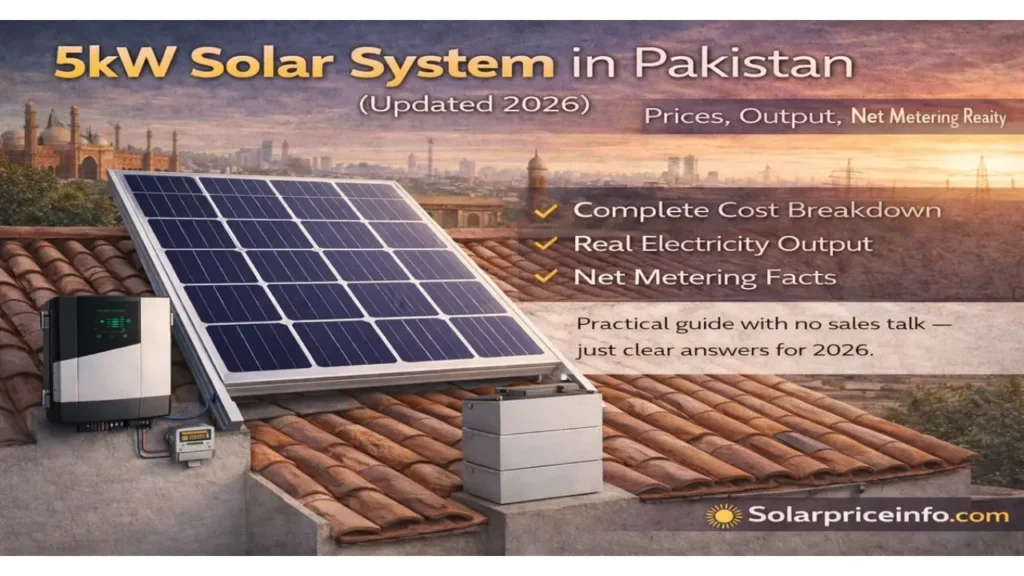
Electricity prices in Pakistan are increasing rapidly, while load-shedding and voltage issues continue to affect homes in many cities. Due
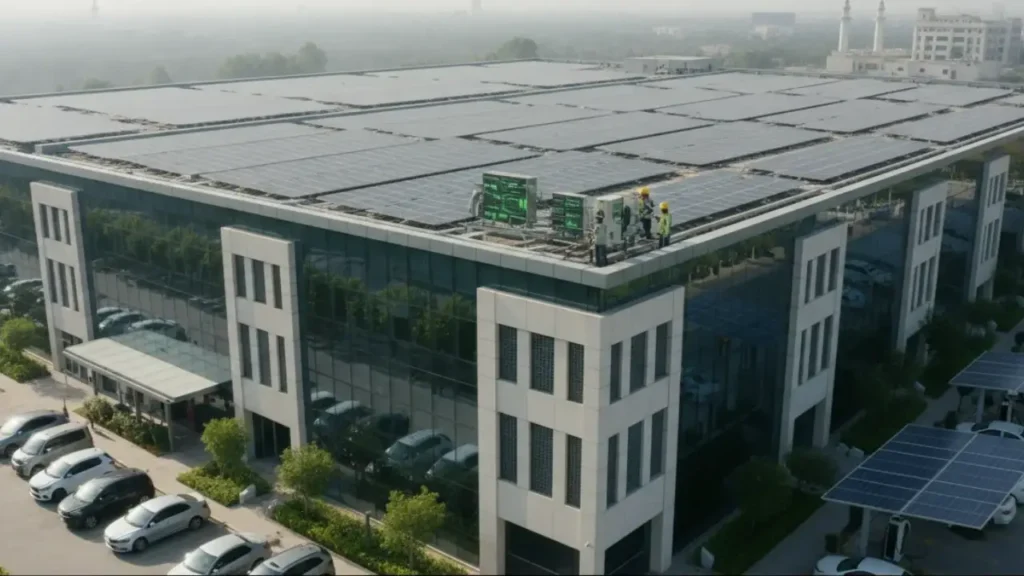
Electricity prices in Pakistan continue to rise, and many households in Lahore are now turning to solar energy as a
As electricity prices continue to rise across Pakistan, more homeowners and businesses are turning toward solar energy to reduce monthly
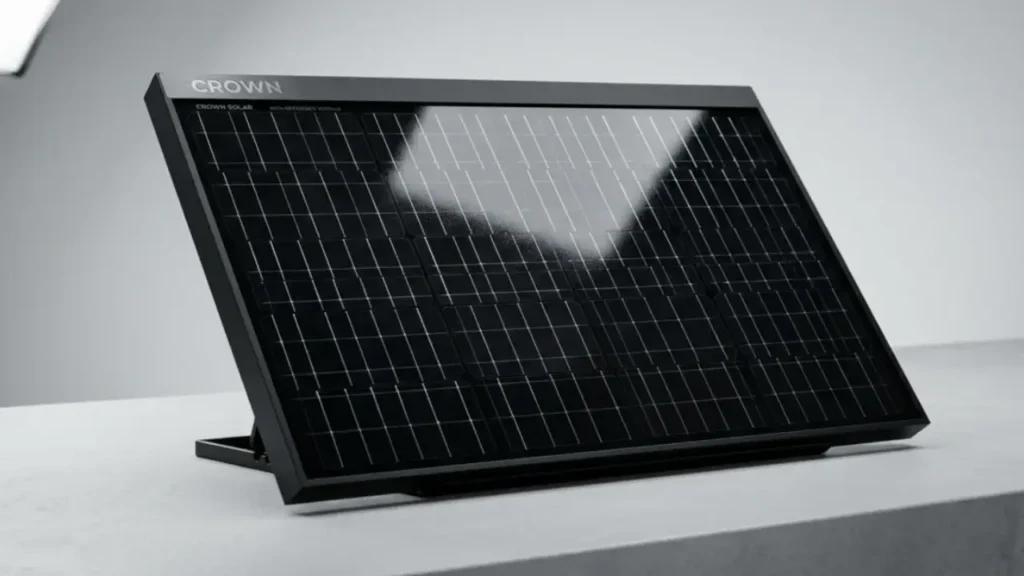
Crown Solar Panel Price in Pakistan 2026 has become one of the most searched topics among homeowners and businesses looking
Solar Plate Rate in Pakistan 2026 has become one of the most searched topics among homeowners, businesses, and farmers looking
Pakistan’s growing electricity prices and continuous load shedding have increased the demand for reliable solar energy solutions. Homeowners, businesses, and
550 Watt Solar Panel Price in Pakistan 2026 has become one of the most searched topics among homeowners, shop owners,
The 585 watt solar panel price in Pakistan in 2026 starts from around Rs. 15,000 and goes up to Rs.
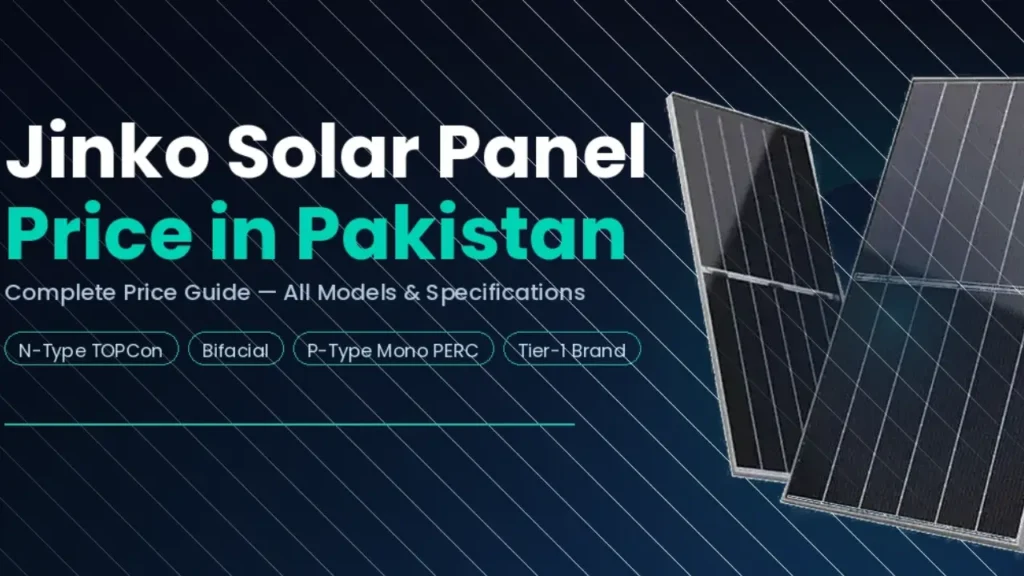
Jinko Solar Panel Price in Pakistan 2026 has become one of the most searched topics among homeowners, businesses, and commercial